Three Common Athlete Recovery Problems (and How to Fix Them)
When Training Stress Doesn’t Fully Resolve
Most athletes don’t struggle because they train too hard — they struggle because their bodies don’t fully resolve the stress of training.
These aren’t always injuries. They’re recovery bottlenecks — points where the body gets stuck instead of adapting. Left unaddressed, these bottlenecks quietly slow progress and increase wear over time.
At Physio Room, we see these patterns every day — and we address them with a clear, repeatable process.
The Physio Room Approach
Reset → Restore → Reload
(Or, if not injured: Rehab → Perform → Recover)
Rather than chasing symptoms, we identify where the system is stuck — and help move it forward.
Problem 1: Pain That Lingers Longer Than It Should
After hard training, soreness is normal. But when pain:
-
Feels out of proportion to the workload
-
Limits movement days later
-
Creates guarding or hesitation
…it’s often the nervous system staying on high alert, even after tissue is ready to move again.
This isn’t always a tissue problem — it’s often a signal regulation problem.
How Physio Room Addresses It: RESET
We begin by calming the system:
-
Reducing excessive protective tone
-
Improving pain modulation
-
Restoring movement confidence
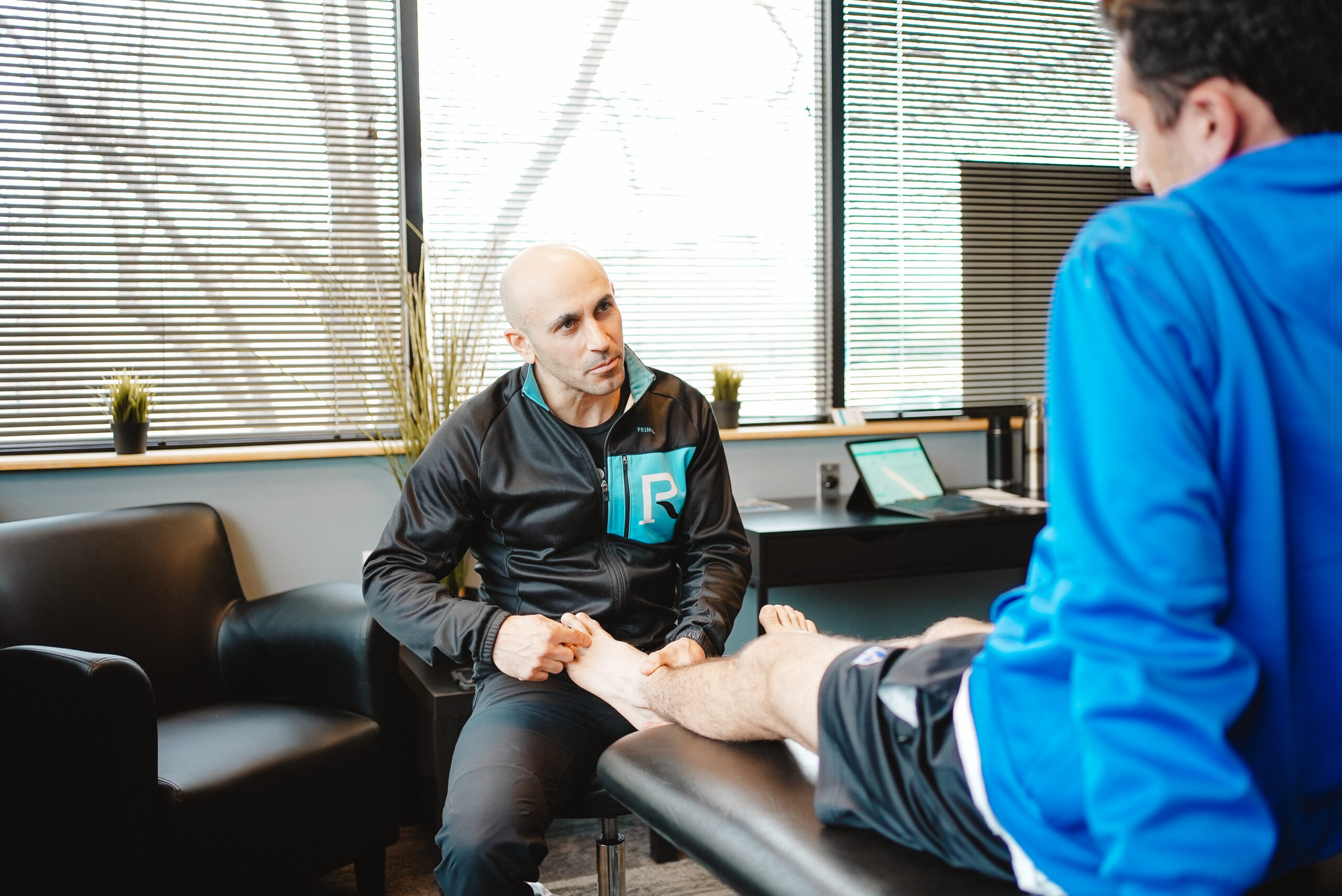
This may include hands-on treatment, movement-based interventions, and clinic tools such as electrical stimulation or manual techniques — always guided by assessment, not protocols.
The goal: create safety in the system so healing can proceed.
Problem 2: Slow Recovery Between Training Sessions
Recovery depends on circulation. When blood flow is limited — or when recovery strategies add stress instead of relief — athletes may experience:
-
Heavy or sluggish muscles
-
Lingering fatigue
-
Longer warm-ups just to feel normal
Without adequate circulation, tissue can remain stuck in inflammation and never fully transition into repair.
How Physio Room Addresses It: RESTORE
Once the system is calmer, we restore:
-
Circulation
-
Tissue mobility
-
Normal movement patterns
This is where we layer manual therapy, soft-tissue strategies, and recovery tools when appropriate to help tissues move through repair and into remodeling.
The focus isn’t doing more — it’s doing what helps the body recover between sessions, not just during them.
Problem 3: Muscles That Feel “Off” or Inhibited
Sometimes muscles aren’t painful — they’re just not firing well. This can show up as:
-
Weak or delayed activation
-
Poor coordination
-
A sense that the body isn’t responding the way it should
This often follows fatigue, travel, or injury — and it increases injury risk if ignored.
How Physio Room Addresses It: RELOAD
Once tissues are calmer and moving better, we reload them by:
-
Restoring activation and coordination
-
Reinforcing efficient movement patterns
-
Progressively reintroducing strength and speed
This is where rehab blends seamlessly into performance, helping athletes not just feel better — but move better under load.
Why This Works
Healing follows a predictable process:
Inflammation → Repair → Remodel
Physio Room’s process respects that biology:
-
Reset supports inflammation resolution and nervous system regulation
-
Restore supports repair through circulation and tissue mobility
-
Reload guides remodeling so tissues tolerate future training demands
Tools may support the process — but the process itself is the treatment.
Recover Smarter, Not Softer
Athletes who last don’t avoid stress — they resolve it efficiently.
At Physio Room, we don’t just treat pain. We help athletes:
-
Recover between sessions
-
Train with confidence
-
Build long-term resilience
That’s not soft recovery.
That’s smart performance care.

Written by Dr. Nate Henry – PT, DPT, DSc, Board Certified OCS & SCS, CSCS| Physio Room
Connect with Physio Room:
Find Us On Our Socials
Website
Instagram
Facebook