Lift Strong, Live Strong: Deadlifts for a Resilient Back
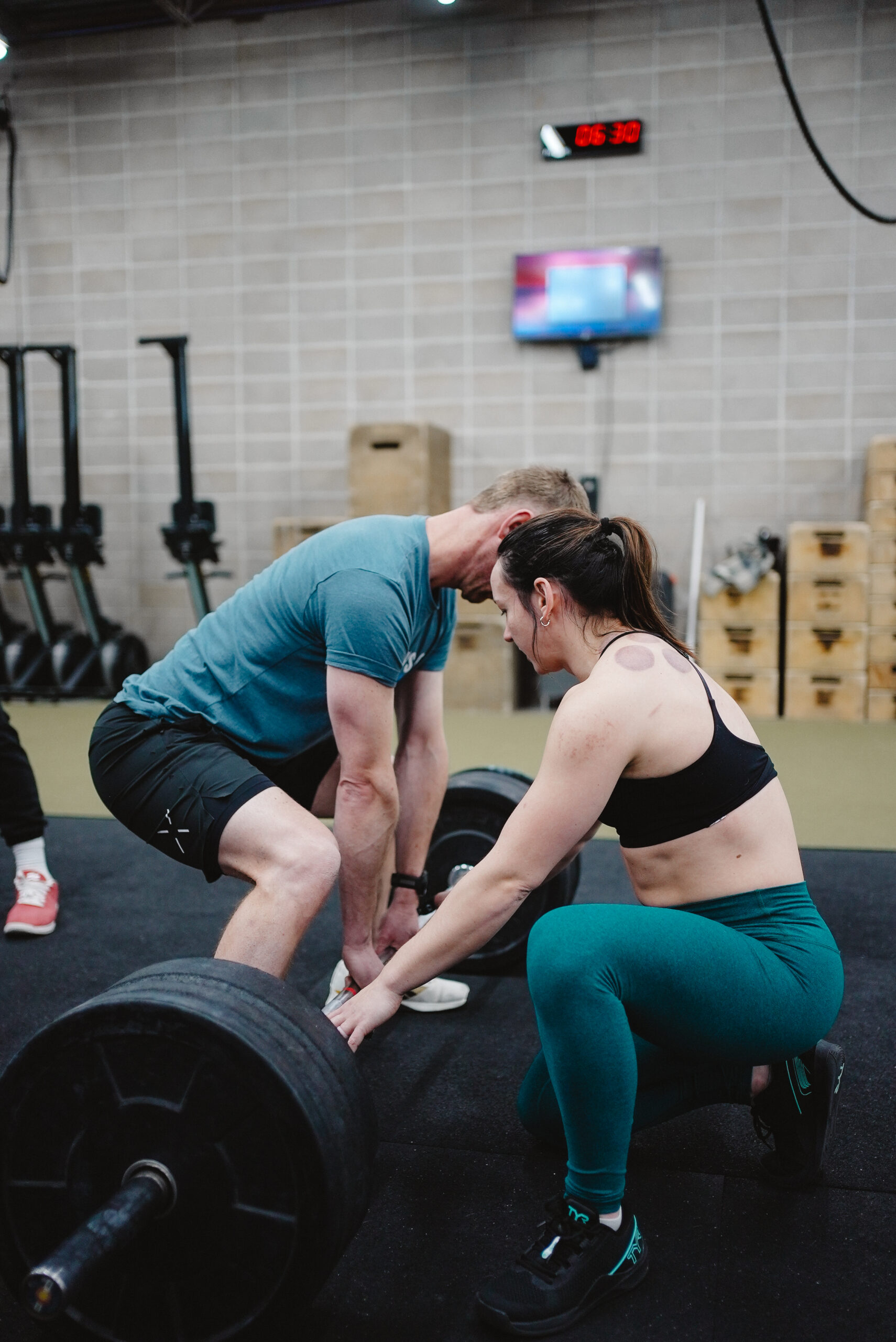
Deadlifts often get a bad rap—frequently blamed for causing low back pain or injury. But here’s the truth: when taught and loaded appropriately, the deadlift is one of the most essential movements for building a strong, healthy, and resilient back.
Why Deadlifts Matter
Deadlifts train the hip hinge—a fundamental movement pattern used every day. From picking up groceries to lifting a child, we’re constantly hinging. However, many people lose this pattern due to sedentary habits, poor movement awareness, or fear of bending under load. Over time, that loss leads to back pain, poor tissue tolerance, and early fatigue.
Training the hinge through deadlifts improves:
- Hinge tolerance for daily life—lifting without strain or hesitation.
- Bone density and strength, especially in the spine, hips, and pelvis.
- Postural resilience—the ability to maintain integrity under stress, reducing fatigue and breakdown during long days or demanding tasks.
- Tissue adaptation—ligaments, tendons, and discs respond positively to progressive loading, becoming stronger and more robust.
Common Deadlift Variations
Each variation has a role, depending on goals, injury history, and movement limitations:
- Conventional Deadlift: Targets glutes, hamstrings, and spinal extensors. Great for overall strength and posterior chain development.
- Sumo Deadlift: Wider stance and upright torso reduce shear force on the spine—helpful for those with mobility restrictions or low back sensitivity.
- Trap Bar Deadlift: Neutral grip and centered load make it beginner-friendly and excellent for athletes and older adults.
- Romanian Deadlift (RDL): Focuses on eccentric hamstring loading and hinge control—perfect for improving mobility and endurance.
- Single-Leg RDL: Challenges balance, pelvic control, and glute engagement. Great for runners, lifters, and anyone addressing asymmetries.
Bottom Line
Avoiding deadlifts because of fear does more harm than good. The key is smart progression, sound technique, and individualized loading. When we train the back to do its job, we build a body capable of handling real life—one rep at a time.
Deadlift to live better, not just to lift heavier.
Written by Dr. Ryan Stakowiak- PT| Physio Room
Connect with Physio Room:
Find Us On Our Socials
Website
Instagram
Facebook