TMJ Disorders: Symptoms, Causes, and How Physical Therapy Can Help
If you’ve ever woken up with a sore jaw, noticed clicking or popping when you chew, or experienced headaches that seem to radiate from your temples, you may be dealing with a temporomandibular joint (TMJ) disorder, often referred to as TMD.
While it’s easy to brush these symptoms off at first, they can become a persistent source of pain that affects everyday activities like eating, talking, and even sleeping.
The good news? Physical therapy is often one of the most effective first-line treatments for TMJ disorders and can help many people avoid more invasive interventions.
What Is the TMJ?
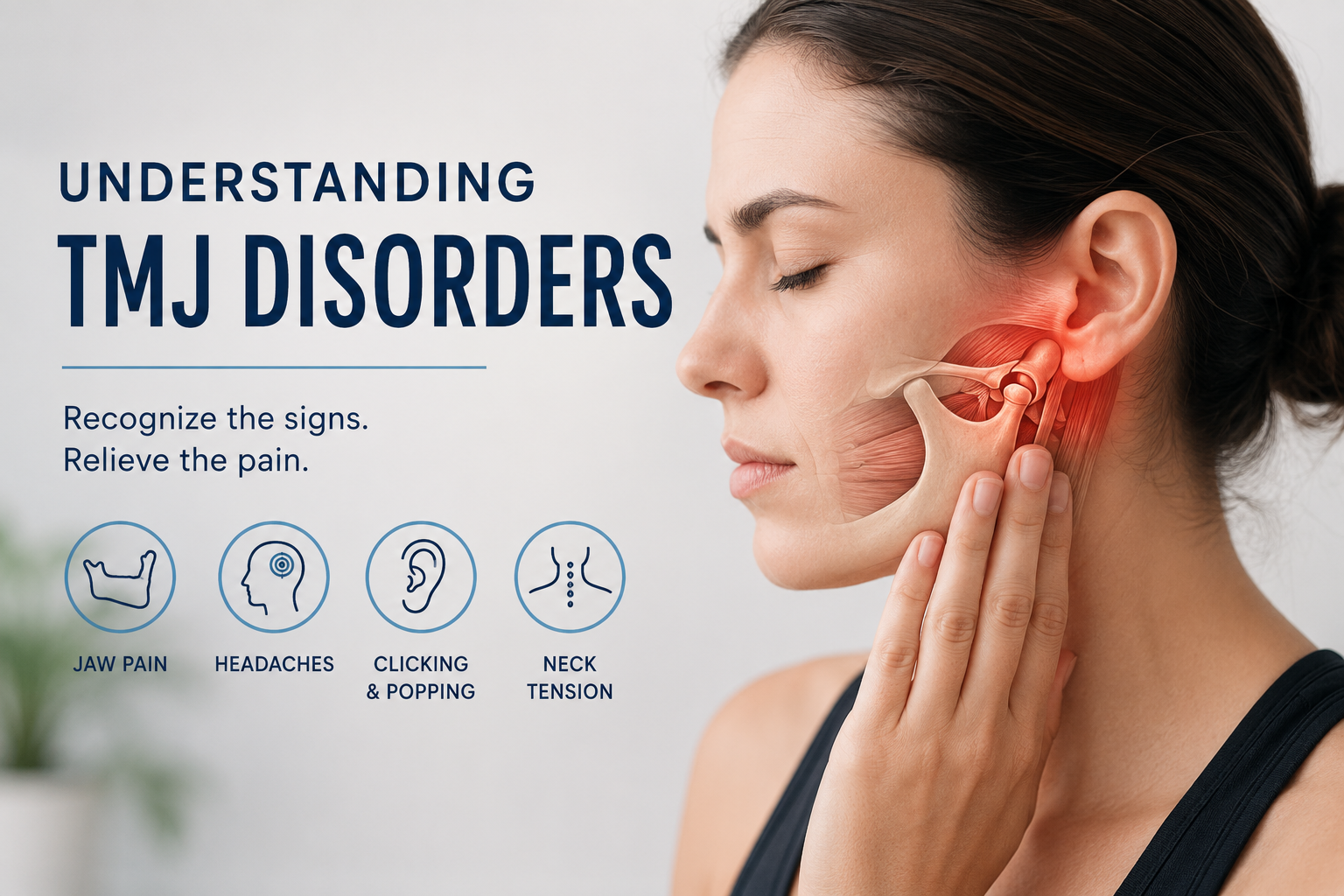
The temporomandibular joint (TMJ) is the hinge that connects your lower jaw (mandible) to your skull. You have one joint on each side of your face, located just in front of your ears.
Every time you:
- Talk
- Chew
- Yawn
- Swallow
your TMJ is working.
Because the joint is closely connected to the muscles of your jaw, neck, and face, problems in one area often create pain somewhere else.
Common Signs and Symptoms of TMJ Disorders
TMJ disorders can present in many different ways. Common symptoms include:
- Jaw pain or tenderness, especially when chewing or talking
- Clicking, popping, or grinding when opening or closing your mouth
- Jaw locking or difficulty opening your mouth fully
- Headaches around the temples or behind the eyes
- Neck and shoulder tension without an obvious cause
- Ear pain, pressure, or a feeling of fullness (without an infection)
- Facial soreness or fatigue, especially in the morning (often from nighttime clenching or grinding)
- Difficulty finding a comfortable bite
If you’ve experienced these symptoms for more than a couple of weeks, it’s worth getting evaluated. TMJ disorders are highly treatable, and earlier intervention often leads to faster recovery.
Why Your Neck Matters Just as Much as Your Jaw
TMJ pain is rarely just a “jaw problem.”
The muscles of your jaw, neck, and upper back all work together to support your head and control movement. They also share nerve pathways, meaning dysfunction in one area can create pain in another.
For example:
- Poor posture from sitting at a desk
- Looking down at a phone for long periods
- Stiffness in the upper neck
can all increase stress on the jaw.
Likewise, jaw dysfunction can contribute to neck pain and headaches.
That’s why effective treatment focuses on the entire system—not just the jaw itself.
How Physical Therapy Can Help TMJ Pain
Every patient is different, so treatment always begins with a comprehensive evaluation.
From there, your plan may include several evidence-based treatment techniques.
Joint Mobilization
Gentle hands-on mobilizations help restore normal movement within the jaw joint, improving opening range while reducing pain, clicking, and stiffness.
Cervical (Neck) Manipulation
When neck stiffness is contributing to jaw pain—which is very common—improving mobility in the upper cervical spine can significantly reduce symptoms.
Research supports cervical treatment as part of a comprehensive TMJ program, particularly for:
- Reducing headaches
- Improving jaw opening
- Restoring normal movement
It works best when combined with manual therapy and exercise.
Dry Needling
Dry needling can reduce muscle tension and deactivate painful trigger points throughout the jaw, face, and neck.
Common treatment areas include:
- Masseter
- Temporalis
- Suboccipital muscles
- Upper trapezius
Many patients notice improved jaw movement and decreased tension within just one or two visits.
Exercises That Help TMJ Recovery
Hands-on treatment helps reduce pain, but exercise is what creates lasting results.
Depending on your evaluation, your therapist may prescribe exercises such as:
Chin Tucks
Improve head and neck posture while reducing strain on the jaw.
Jaw & Tongue Coordination Exercises
Retrain healthy jaw movement through controlled opening and proper tongue positioning.
Wall Angels
Strengthen the upper back, improve posture, and reduce tension throughout the neck and jaw.
The combination of manual therapy, dry needling, and progressive exercise helps reduce symptoms while preventing them from returning.
You Don’t Have to Live With TMJ Pain
Jaw pain shouldn’t become something you simply learn to live with.
Whether you’re experiencing headaches, clicking, jaw tightness, or neck pain, addressing the problem early can make recovery much easier.
At Physio Room, our team takes a whole-body approach to TMJ disorders by evaluating both the jaw and the surrounding structures that influence how it moves.
With personalized treatment focused on restoring movement, reducing pain, and improving function, our goal is to help you return to eating, talking, exercising, and living comfortably again.
If you’re experiencing TMJ symptoms, we’d love to help.
Schedule an evaluation at our Highlands Ranch or Colorado Springs clinic and let us help you get back to feeling your best.

Written by By Dr. Nate Henry, PT, DPT, DSc, Board Certified OCS & SCS, CSCS | Physio Room
Connect with Physio Room:
Find Us On Our Socials
Website
Instagram
Facebook