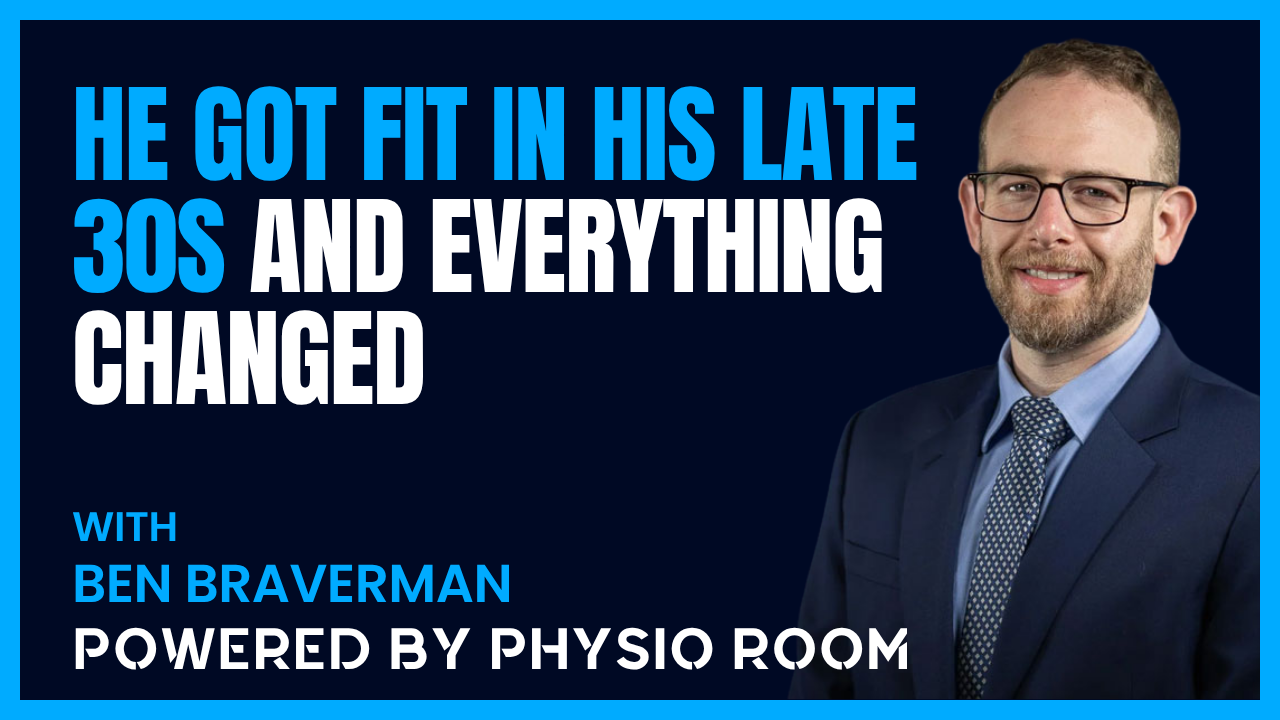
Ben Braverman dropped from 240 pounds and a couple of prescriptions to a sub-3:40 marathon, and he says the real transformation happened somewhere between his ears.
Ben joins Dr. Andrew Fix to talk about what actually changes when someone moves from the far end of the wellness spectrum toward something closer to optimization. His story starts with running for beginners in its truest form: a guy on a treadmill who couldn’t run a mile, slowly building toward a marathon a few years later. The physical numbers are real: weight loss, a faster marathon, and blood pressure readings that finally started moving in the right direction. But Ben keeps circling back to something harder to quantify. He calls it mental clarity, the sense that decisions got easier, stress got more manageable, and his work and relationships improved almost as a side effect of taking care of his body.
What does it actually feel like to operate without a constant mental fog? And how much of that fog do most people simply accept as normal because they’ve never known anything else?
The two also dig into why personal growth rarely moves in a straight line. Ben’s second year of running was slower than his first, and a coach’s advice to celebrate small wins kept him moving forward when the personal records stopped coming. Andrew frames health less as a finish line and more as seasons of pushing and pulling back, a pattern borrowed from how elite athletes train and recover. Underneath all of it sits one quiet but stubborn idea: consistency, not intensity, is what actually moves people from the left side of the spectrum to the right. The conversation touches on nutrition, sleep, and the discomfort that seems to accompany any real change, landing on a simple idea: the gap between feeling okay and feeling genuinely well might be smaller than most people think.
Quotes
- “For someone that’s never really felt fit, you’re always a little tired because you’re eating poorly. You’re always a little fatigued.” (16:07 | Ben Braverman)
- “You don’t need to be running forty, fifty, sixty miles a week, lifting four to five times a week, cold plunging five times a week, hot yoga three times a week…If you get out there and you run for 30 minutes four times a week, and getting some resistance training two times a week, you probably will see changes if you’re on that left side of the spectrum.” (23:41 | Ben Braverman)
- “If you don’t have a coach, you should. I would give it a shot. If you’re trying to get faster or just trying to accomplish something, it’s helpful to have that expert.” (50:42 | Ben Braverman)
- “I feel like I process stress better. And I think that’s a byproduct of mental clarity. Being able to process the down days.” (43:41 | Ben Braverman)
- “If you know somebody that’s struggling with fitness, like I was on the left side of the spectrum, send them this pod, because you can transform even much later in life.” (53:55 | Ben Braverman)
Connect with Ben Braverman:
The In Good Order Podcast with Ben Braverman
(5% off)
Movemate: Award-Winning Active Standing Board
15% off Promo Code: DRA15
20% off: ANDREWF20
Connect with Physio Room:
Follow Physio Room on Instagram
Follow Physio Room on Facebook
Podcast production and show notes provided by HiveCast.fm
Connect with Physio Room:
Find Us On Our Socials
Website
Instagram
Facebook