Postpartum and Perimenopause: What These Two Seasons Have in Common
Postpartum and perimenopause might seem like completely different seasons of life.
One comes with a baby, sleepless nights, feeding, and a body recovering from pregnancy and birth. The other comes years later, often bringing changes in your menstrual cycle, sleep, mood, body composition, and energy.
But there is actually more overlap between these two seasons than you might think.
Both postpartum and perimenopause are periods of significant hormonal change. And both are times when your body may need a different approach to movement, recovery, strength, and pelvic health.
Your body is changing. That doesn’t mean something is wrong.
During pregnancy and postpartum, changing hormones affect everything from connective tissue and muscle function to your pelvic floor and abdominal wall.
During perimenopause, fluctuating and eventually declining estrogen can also affect muscle, bone, connective tissue, sleep, energy, and the genitourinary system.
The symptoms can look different, but the experience can feel surprisingly similar:
- Changes in sleep and energy
• Changes in body composition
• Feeling like your body doesn’t respond to exercise the way it used to
• Achiness or new areas of discomfort
• Changes in pelvic floor function
• Urinary leakage or urgency
• Changes in sexual function
• A feeling that your strength or confidence has changed
• Needing more recovery than you used to
And in both seasons, it can be tempting to think, “I guess this is just what my body does now.”
It doesn’t have to be.
This is not the time to stop strength training
If there is one thing we want women to know during both postpartum and perimenopause, it’s this:
Your body still needs strength.
In fact, these can be especially important seasons to maintain and build it.
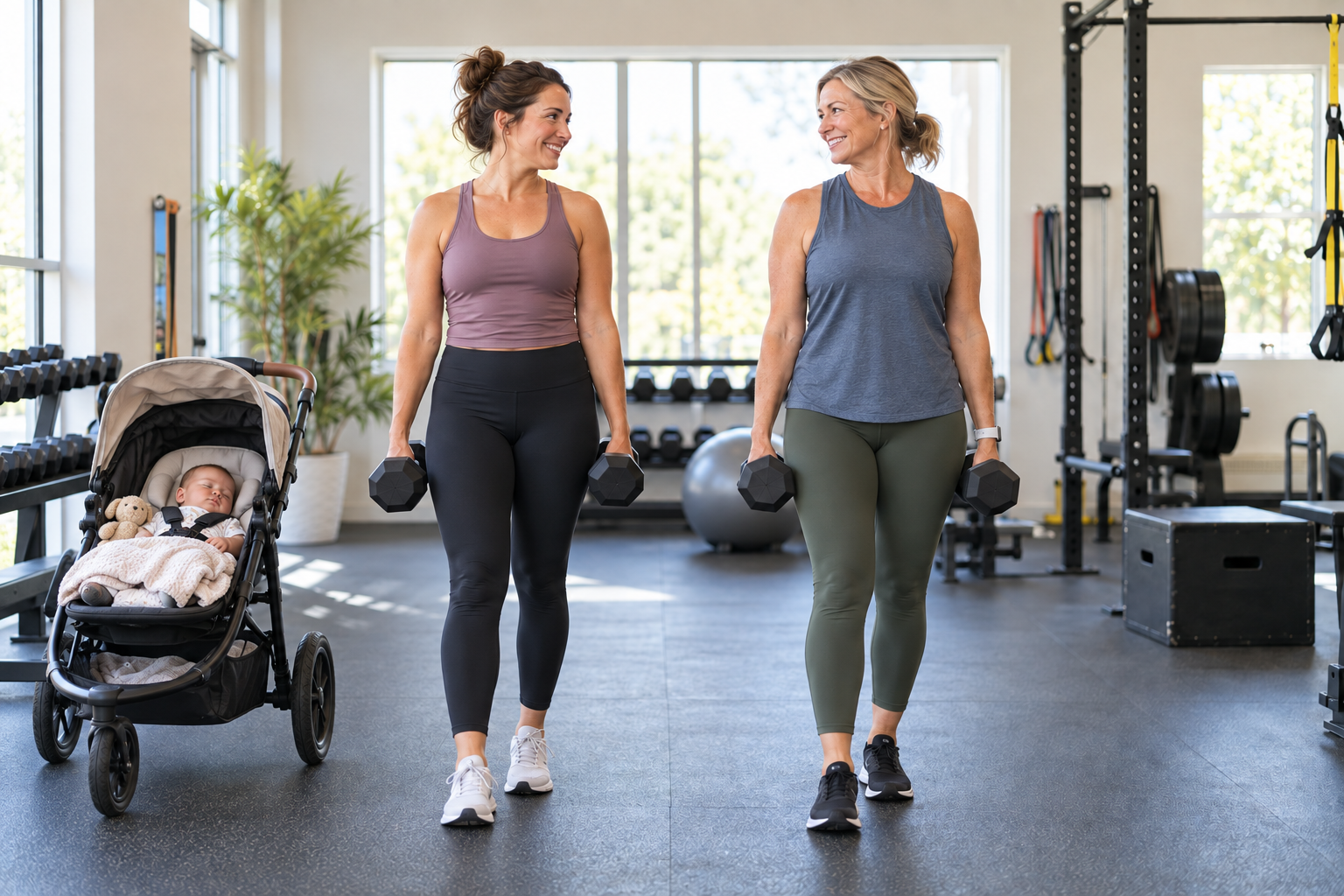
For postpartum women, returning to resistance training can help rebuild strength and confidence after pregnancy and birth. Current guidelines support a gradual, individualized return to physical activity, including resistance training, as the body heals.
For women in perimenopause and beyond, strength training becomes an important tool for maintaining muscle mass and strength while also supporting bone health. The International Menopause Society specifically recommends regular physical activity, including resistance exercise, as part of midlife and menopause care.
That doesn’t mean you need to go from zero to heavy barbell squats.
It means you don’t need to be afraid of getting stronger.
Strength training should be progressed to meet your body where it is right now.
That might mean rebuilding your core and pelvic floor connection postpartum. It might mean modifying impact because of symptoms. It might mean learning how to lift without leaking. Or it might mean finally progressing beyond the light weights you’ve been using because someone told you they were “safer.”
The goal isn’t simply to exercise.
The goal is to build a body that can support the life you want to live.
And don’t forget your pelvic floor
Your pelvic floor is part of your strength system.
It works with your diaphragm, abdominal wall, back, and hips to help manage pressure and provide support during everything from walking and running to lifting your kids or a heavy weight.
Pregnancy and childbirth can challenge this system. So can the hormonal and tissue changes that occur during the menopausal transition.
Pelvic floor physical therapy isn’t just for women who are leaking urine.
It can be helpful for women experiencing:
- Urinary leakage or urgency
• Pelvic pressure or heaviness
• Prolapse symptoms
• Pelvic or abdominal pain
• Pain with intercourse
• Difficulty returning to running, lifting, or higher-impact exercise
• Core or abdominal wall concerns
• Changes after pregnancy or childbirth
• New pelvic symptoms during perimenopause or menopause
And perhaps most importantly, pelvic floor therapy doesn’t have to mean taking a break from the activities you love.
A good pelvic floor physical therapist can help you understand what is happening in your body and figure out how to move forward.
You shouldn’t have to choose between pelvic floor health and getting stronger
This is one of the reasons we believe so strongly in combining pelvic health with exercise and strength training.
At Physio Room, our pelvic floor providers don’t just look at your pelvic floor in isolation. We look at the whole person and how your pelvic floor functions within the activities you actually care about.
That might be lifting weights.
Running.
Playing with your kids.
Returning to sports.
Hiking.
Having sex without pain.
Getting through a workout without leaking.
Or simply feeling strong and confident in your body again.
Postpartum and perimenopause are not seasons where you need to shrink your life to accommodate your body. They’re seasons where your body may need a little more individualized attention.
You don’t have to accept pain, leaking, pelvic pressure, weakness, or feeling disconnected from your body as “just part of being a woman.”
And you don’t have to figure it out alone.
Ready to understand your body and get stronger?
Schedule an appointment with one of our pelvic floor physical therapists at Physio Room. Our pelvic floor providers are also experts in exercise and resistance training, so we can help you connect pelvic health with the strength, movement, and activities that matter most to you.
Your body is changing. Let’s help you make it stronger, not smaller.
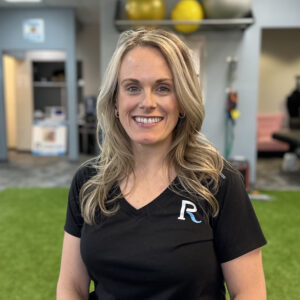
Written by Dr. Katie Sasser PT, DPT, M.Ed., Cert. DN | Physio Room
Connect with Physio Room:
Find Us On Our Socials
Website
Instagram
Facebook