
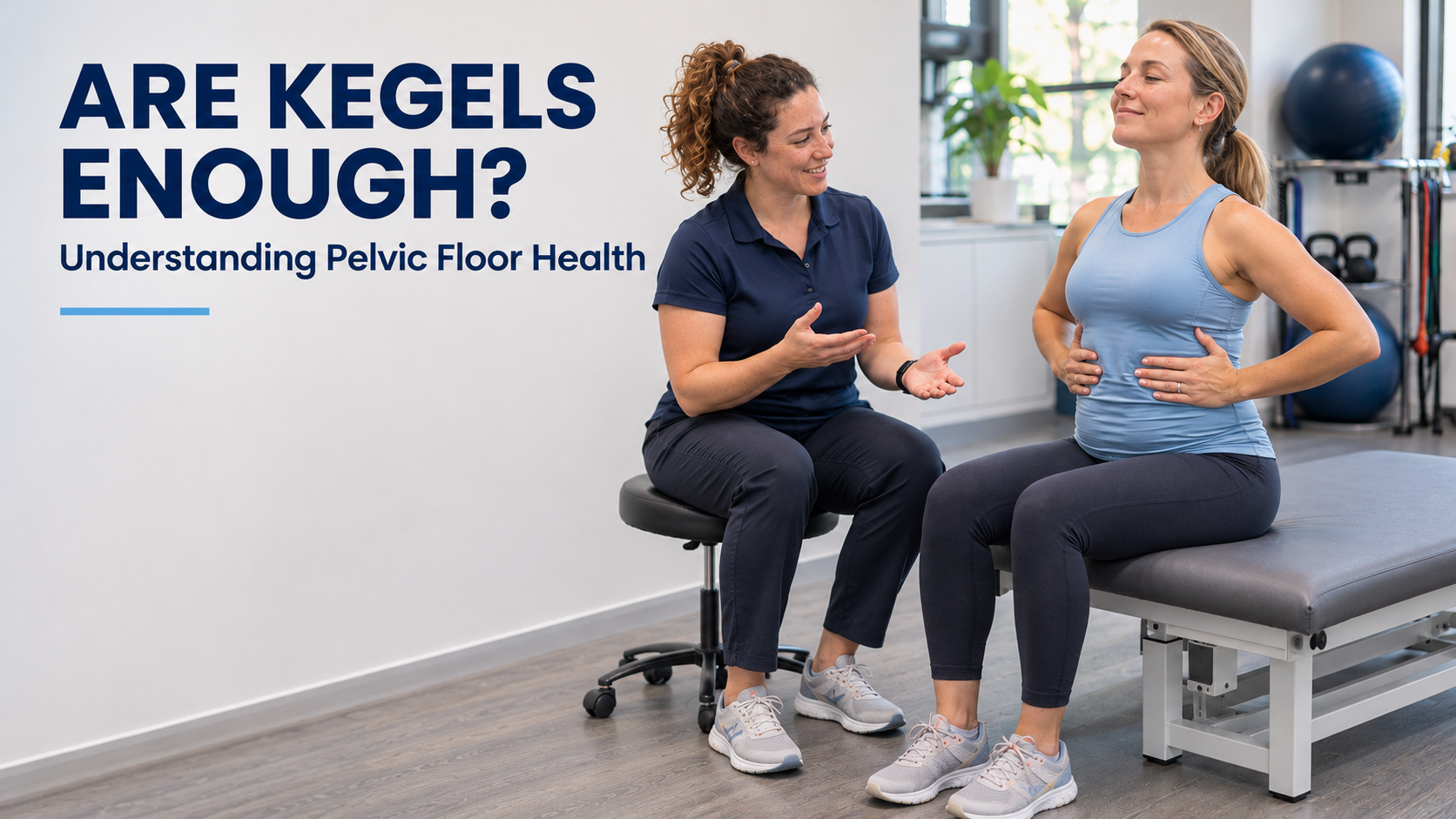
Are Kegels Enough? What You Need to Know About Pelvic Floor Health
Why pelvic floor health is about more than just strengthening.
When you hear the words “pelvic floor,” what’s the first thing that comes to mind?
For many people, the answer is Kegels.
Whether you’re experiencing urinary leakage, pelvic discomfort, or changes after pregnancy, you’ve probably heard the advice to “just do your Kegels.”
But what if Kegels aren’t what your pelvic floor actually needs?
Your pelvic floor is much more complex than a group of muscles that simply need to be stronger. Just like any other muscle group in your body, it needs the ability to contract, relax, coordinate, and respond to the demands of everyday life.
And sometimes, doing more Kegels isn’t the answer.
What Exactly Is Your Pelvic Floor?
Your pelvic floor is a group of muscles located at the bottom of your pelvis. Think of these muscles as a hammock that helps support your pelvic organs, including your bladder, bowel, and reproductive organs.
But these muscles do much more than provide support. They also play important roles in:
- Bladder and bowel control
- Sexual function
- Core stability and pressure management
- Supporting your pelvic organs
- Responding to physical activities such as lifting, running, and jumping
Just like your quadriceps, hamstrings, or glutes, your pelvic floor muscles need to function appropriately for the activities you’re asking them to perform.
Stronger Isn’t Always Better
One of the biggest misconceptions about pelvic floor health is that symptoms automatically mean your pelvic floor is weak.
While weakness can contribute to pelvic floor dysfunction, it isn’t the only possible cause.
Sometimes, pelvic floor muscles may be holding too much tension or have difficulty fully relaxing. This is often referred to as an overactive or high-tone pelvic floor.
Imagine holding your biceps in a flexed position all day. Eventually, those muscles would become fatigued and uncomfortable, and you might have difficulty using them efficiently.
Your pelvic floor can experience a similar problem.
When pelvic floor muscles have difficulty relaxing, some individuals may experience:
- Pelvic pain or pressure
- Pain during intercourse
- Difficulty initiating urination or fully emptying the bladder
- Constipation or difficulty with bowel movements
- Urinary urgency or frequency
In these situations, repeatedly performing Kegels without addressing muscle tension or coordination may not help and could potentially worsen symptoms.
The goal is a pelvic floor that can contract, relax, and coordinate well—not strength alone.
Your Pelvic Floor Needs to Relax, Too
Think of your pelvic floor like any other muscle group you train at the gym. Your muscles need to produce tension and then release it. Both abilities are important.
Your pelvic floor needs to contract when appropriate, such as when you cough, sneeze, or lift something heavy. But it also needs to relax when you’re urinating, having a bowel movement, or simply resting.
How Breathing Fits In
Your diaphragm and pelvic floor work together as part of your body’s pressure-management system.
During a relaxed inhale, your diaphragm descends, and your pelvic floor typically lengthens slightly. As you exhale, both structures move back toward their resting positions.
Learning how to coordinate your breathing and pelvic floor can be an important part of treatment, particularly for individuals who struggle with excessive tension or muscle coordination.
What About Squats, Deadlifts, and Running?
Pelvic floor physical therapy doesn’t have to be limited to exercises performed while lying on your back.
Your pelvic floor is active throughout your day, including when you’re walking, lifting weights, running, and jumping. These activities create different demands on your pelvic floor and require your muscles to respond appropriately.
Pelvic Floor Symptoms During Lifting
Someone who experiences urinary leakage during heavy squats might benefit from more than simply performing Kegels.
Depending on the individual, treatment may involve evaluating:
- Pelvic floor strength and coordination
- Breathing strategies and pressure management
- Exercise technique
- Ability to tolerate progressively heavier loads
Pelvic Floor Symptoms During Running
Similarly, a runner experiencing urinary leakage may benefit from an assessment of pelvic floor function alongside running mechanics, strength, and training demands.
The goal isn’t necessarily to avoid these activities. It’s to identify what may be contributing to symptoms and develop a plan that helps you participate in the activities you enjoy.
What Does Pelvic Floor Physical Therapy Look Like?
Pelvic floor physical therapy is not a one-size-fits-all approach.
A pelvic health physical therapist evaluates your symptoms, movement, strength, coordination, and individual goals to determine what your body needs.
Depending on your presentation, treatment may include:
- Pelvic floor strengthening: Improving muscle strength and endurance when weakness is contributing to symptoms.
- Relaxation and breathing exercises: Helping muscles release excessive tension and coordinate with your diaphragm.
- Hip and core strengthening: Addressing strength and movement limitations that may influence your overall function.
- Movement and exercise modifications: Helping you return to activities such as running, lifting, or jumping with greater confidence.
- Bladder and bowel education: Addressing habits and behaviors that may contribute to symptoms.
Is an Internal Examination Required?
A pelvic floor assessment may include an internal examination, but this is optional and performed only with your informed consent. There are many ways to begin evaluating and addressing pelvic floor symptoms.
Ultimately, treatment should be individualized to you, your symptoms, and your goals.
Healthy Pelvic Floor Function Goes Beyond Kegels
Kegels can be a valuable tool, but they are only one piece of the puzzle.
A healthy pelvic floor can contract, relax, and coordinate appropriately when you need it to. Squeezing harder or holding a contraction longer doesn’t tell the whole story.
Whether you’re navigating changes after pregnancy, experiencing urinary leakage during workouts, or dealing with pelvic discomfort, you don’t have to simply accept these symptoms as your new normal.
Your pelvic floor deserves an individualized approach that helps you move, feel, and perform your best.
Get Support for Your Pelvic Floor Health
If you’re experiencing pelvic floor symptoms or have questions about how pelvic floor physical therapy can help, our team at Physio Room would love to help you take the next step.

Written by Dr. Ana Whisenant PT, DPT, Cert. DN | Physio Room
Connect with Physio Room:
Find Us On Our Socials
Website
Instagram
Facebook