When the question every injured runner is afraid to ask, “Do I have to stop?”, finally gets a straight answer, it turns out the real story has less to do with the pain itself and more to do with everything the runner wasn’t tracking.
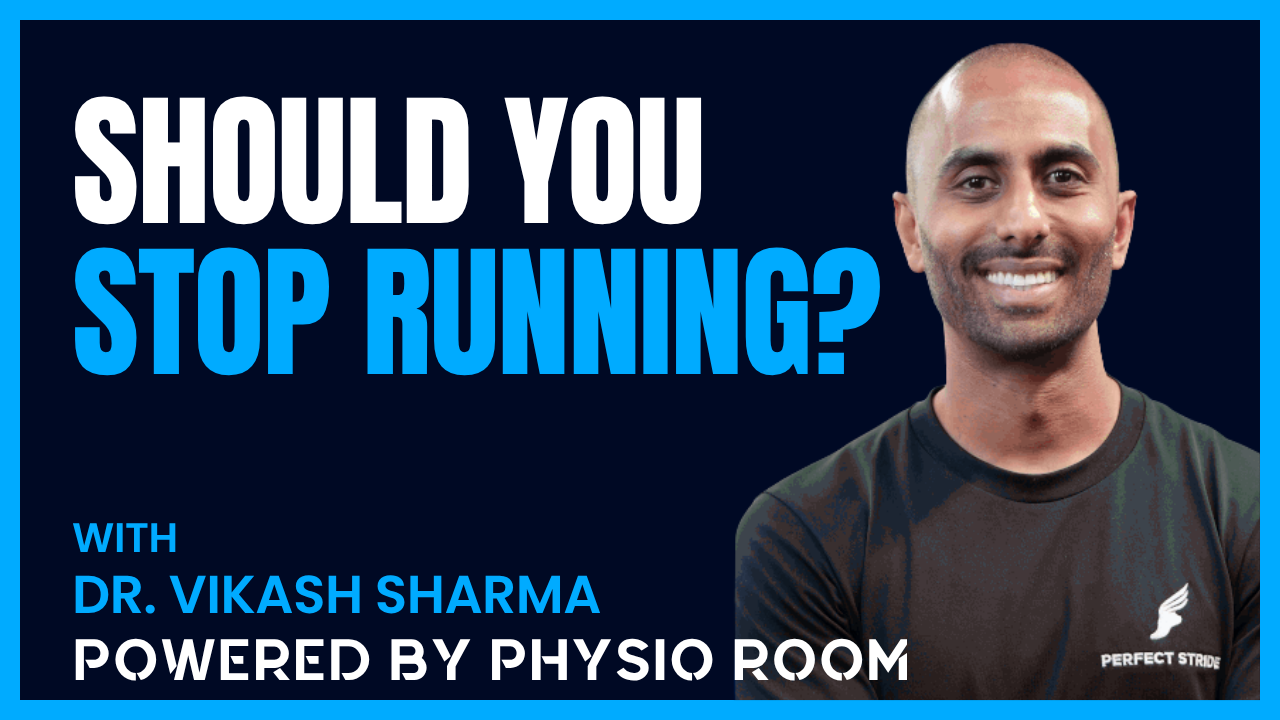
Dr. Andrew Fix sits down with Dr. Vikash Sharma, DPT, founder of Perfect Stride Physical Therapy in New York, to talk through managing running injuries, avoiding stress fractures, and building a smart return to running after time off.
Stress fractures get missed more often than they should, and the clue is usually hiding in a two-minute conversation about nutrition and training load. Has your mileage gone up? Has your food intake kept pace? For a lot of runners, the answer to that second question is no.
For soft tissue injuries, Sharma’s approach is less about stopping and more about finding a sustainable baseline, trimming the run, filling the rest with cross-training, and using that window to build the strength and mobility that likely broke down first.
The conversation also covers training load management, deload weeks, why most runners’ strength work stopped producing results long ago, and what a real return-to-run progression actually looks like.
Find Dr. Vikash Sharma at @vikashsharma_dpt on Instagram or at perfectstridept.com. His clinical education platform for coaches and clinicians is at runningforlifeeducation.
Quotes
- “Runners run. That’s what they want to do, and they’ll keep running until the wheels fall off.” (09:48 | Dr. Vikash Sharma)
- “If two months ago you were running X amount of mileage and now you’re up 75% from that, but your nutrition hasn’t really changed at all, and now you’re starting to get signs and symptoms that make me think you have a bone stress injury, a hundred percent we’re shutting it down.” (10:39| Dr. Vikash Sharma)
- “Just like training their musculoskeletal system, just like training their nervous system and their brain — we got to train your gut as well.” (22:13 | Dr. Vikash Sharma)
- “Your low days need to be low so that your high days can truly be high days.” (32:53 | Dr. Vikash Sharma)
- “There’s always a story behind this human. There is a human in front of you. Just get back to that human element and dig — a lot of your questions will get answered the more they’re talking to you.” (54:23 | Dr. Vikash Sharma)
Connect with Dr. Vikash Sharma:
Perfect Stride Physical Therapy
Follow Perfect Stride Physical Therapy on Instagram
Movemate: Award-Winning Active Standing Board
15% off Promo Code: DRA15
20% off: ANDREWF20
Connect with Physio Room:
Follow Physio Room on Instagram
Follow Physio Room on Facebook
Podcast production and show notes provided by HiveCast.fm
Connect with Physio Room:
Find Us On Our Socials
Website
Instagram
Facebook